
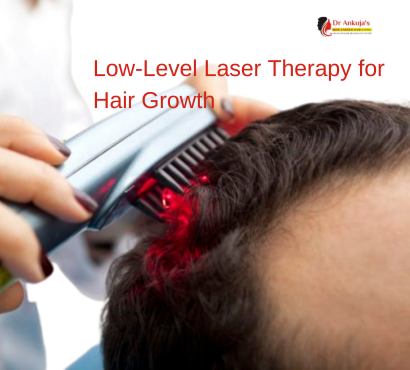
Low‑level laser therapy (LLLT), also called low‑level light therapy or “laser caps/combs,” is now widely marketed as a painless, non‑invasive option for treating pattern hair loss in men and women. Devices using red or near‑infrared light promise thicker, denser hair with just a few short sessions per week at home or in clinics. Understandably, patients in India wonder: Does this actually work? Is it safe? Or is it just hype?
Scientific studies over the last decade show that LLLT can stimulate hair growth in androgenetic alopecia when used correctly, particularly as an add‑on to standard treatments like minoxidil. This blog explains how it works, what the research says, who may benefit, and what realistic expectations should look like.
What Is Low‑Level Laser Therapy (LLLT) for Hair?
- LLLT uses low‑intensity red or near‑infrared light (typically around 630–680 nm) delivered via diodes in combs, helmets, caps, or panels.
- The light is not strong enough to burn or cut tissue; instead, it is thought to modulate cellular activity—a process called photo biomodulation.
For hair loss:
- Light penetrates a few millimetres into the scalp, reaching hair follicles.
- It is believed to increase mitochondrial activity and ATP production, improve microcirculation, and shift follicles from the resting (telogen) phase back into the growing (anagen) phase.
Treatment is usually done several times per week for many months, either in clinics or with home devices.
What Types of Hair Loss Can LLLT Help?
Current evidence is strongest for androgenetic alopecia (AGA)—male and female pattern hair loss.
- Devices have been evaluated in men with typical recession and thinning on the crown, and in women with diffuse thinning along the mid‑scalp.
- There is limited but emerging evidence for some other conditions like alopecia areata with certain devices, but AGA remains the main approved indication.
LLLT is not a cure for scarring alopecias where follicles are permanently destroyed.
What Does the Research Say About Effectiveness?
Multiple clinical trials and reviews have assessed LLLT:
- A review of LLLT for AGA concluded that studies overall show significant increases in hair count and hair thickness compared with sham devices, in both men and women, when used regularly for several months.
- An Indian clinical trial adding LLLT to 5% minoxidil solution reported that the combination group had greater percentage increase in hair count and hair diameter at 12 months than those on minoxidil alone, with higher patient satisfaction scores.
- Multicentre randomised controlled trials of FDA‑cleared laser combs and helmets also found statistically significant improvements in terminal hair density versus placebo devices, typically visible from 16–26 weeks onwards.
Overall, the evidence supports that:
- LLLT is modestly effective at improving hair density and thickness in AGA.
- Results are best when used consistently and often alongside other treatments rather than as a stand‑alone cure.
How Is LLLT Used in Practice?
Protocols vary by device, but common patterns include:
- 2–4 sessions per week.
- Session length 15–30 minutes (depends on device design and power).
- Treatment period at least 3–6 months before judging results; many studies follow patients up to 12 months.
Options:
- Clinic‑based devices – higher upfront device cost borne by the clinic; patients pay per session.
- Home devices (caps, combs, bands) – one‑time device purchase with self‑use under medical guidance.
LLLT is often combined with:
- Topical minoxidil.
- Oral medications like finasteride in men, other anti‑androgens in women.
- Nutritional support and hair‑care changes.
Advantages of LLLT
- Non‑invasive and painless: No needles, cuts, or anaesthesia.
- Convenient: Many can be used at home; minimal downtime.
- Safety profile: Long history of LLLT use in other fields with a low incidence of adverse events.
- Can be used in both men and women and in many skin types.
- Useful for people who cannot tolerate systemic drugs or want to avoid surgery.
Potential Side Effects and Limitations
LLLT is generally well tolerated, but some points to note:
- Occasional initial shedding (telogen effluvium) has been reported in the first 1–2 months of treatment with some devices, typically resolving with continued use.
- Mild scalp warmth, tingling, or dryness can occur.
- Theoretical concern exists that proliferative light therapy might stimulate growth of undiagnosed dysplastic or malignant scalp lesions, so suspicious moles or lesions should be evaluated before starting.
- Biggest limitation is time and adherence; patients often stop too early or use devices inconsistently, reducing effectiveness.
Also, LLLT:
- Does not work equally well for everyone; some patients show modest or no response despite correct use.
- Usually provides thickening and density increase, not complete restoration in advanced bald areas; such patients may still require hair transplant.
Who Is a Good Candidate?
Likely to benefit:
- Men and women with early to moderate androgenetic alopecia, where miniaturised follicles are still present.
- Those already using minoxidil and/or oral agents who want an additional boost.
- Patients preferring non‑drug, non‑surgical options or those not ready for hair transplant.
Less likely to benefit:
- People with advanced baldness (shiny scalp with few visible hairs).
- Scarring alopecias (lichen planopilaris, frontal fibrosing alopecia, etc.).
- Untreated underlying medical causes of hair loss (thyroid disease, iron deficiency) – these must be addressed first.
A dermatologist or trichologist should confirm diagnosis and stage before recommending LLLT.
Practical Expectations for Indian Patients
- Visible change often begins after 3–4 months, with optimal improvement around 9–12 months.
- Improvement is usually described as:
- More hair per square centimetre.
- Thicker shaft diameter.
- Less visible scalp and easier styling.
- More hair per square centimetre.
- Once gains are achieved, maintenance use is often necessary; stopping entirely may lead to gradual return to baseline, similar to minoxidil.
Cost varies widely between clinic‑based sessions and home devices, so explaining realistic outcomes helps patients make informed financial decisions.
FAQs
1) Is low‑level laser therapy as effective as minoxidil or hair transplant?
LLLT has shown significant but generally modest improvements in hair density compared with placebo, and appears to work best as an adjunct to treatments like minoxidil, not a full replacement. Minoxidil and oral anti‑androgens (where appropriate) often remain the backbone of medical therapy, while hair transplant is the most effective option for advanced bald areas. LLLT is best thought of as a non‑invasive addition that can enhance results, especially in early‑stage androgenetic alopecia.
2) Is LLLT safe for long‑term use on the scalp?
Decades of LLLT use in various medical fields, and specific hair studies, show a favourable safety profile with very few serious adverse effects reported. The main cautions are: evaluating any suspicious scalp lesions before starting, using devices from reputable manufacturers, and avoiding overuse beyond recommended protocols. Under dermatologist guidance, long‑term, intermittent use is considered safe for most patients.
3) How do I know if a laser cap or comb advertised online is genuine and effective?
Key checks include: verifying that the device specifies wavelength, power, and treatment schedule consistent with those used in published clinical studies; choosing devices that are appropriately cleared or certified in your country; and ideally using them under medical supervision rather than as a stand‑alone cosmetic gadget. Your dermatologist can help you select a device type, integrate it with other treatments, monitor progress with photos and trichoscopy, and decide if continuing is worthwhile.