
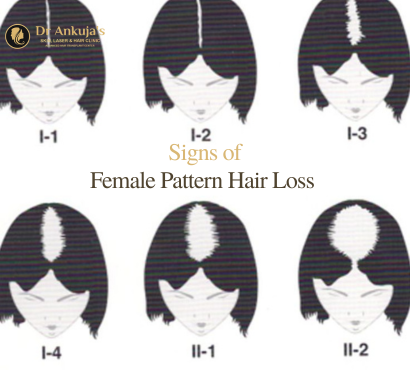
Hair is often described as a woman’s crown. In India, healthy, thick hair is not just a beauty symbol but also tied to confidence and cultural identity. Yet, many women silently struggle with female pattern hair loss (FPHL), medically known as androgenetic alopecia. Unlike sudden hair fall, FPHL progresses gradually, making it harder to notice until significant thinning has occurred.
This blog will help you recognize 7 subtle signs of female pattern hair loss, understand why they matter, and learn when to consult a Dermatologist in Pune or a trusted Hair Care Clinic for timely intervention.
1. Widening Hair Part
One of the earliest signs is a gradual widening of the central hair parting. Women often notice that their usual partition line looks broader, especially under bright light. This is due to miniaturization of hair follicles, where thick strands are replaced by finer ones.
👉 If you notice this change, consult a Hair Transplant Surgeon for evaluation before the thinning worsens.
2. Reduced Hair Volume on Crown
Unlike men, women rarely develop complete bald patches. Instead, they experience diffuse thinning on the crown area. You may feel your ponytail is thinner or your scalp is more visible in photos.
This subtle reduction in density is often overlooked until it becomes cosmetically obvious.
3. Increased Hair Shedding During Combing
FPHL doesn’t always cause dramatic clumps of hair fall. Instead, women may notice consistent shedding of shorter, finer hairs while combing or washing. These miniaturized hairs are a hallmark of androgenetic alopecia.
4. Slower Hair Growth Cycle
Healthy hair grows about 1–1.5 cm per month. In FPHL, the growth phase (anagen) shortens, and the resting phase (telogen) lengthens. This results in slower regrowth after trimming or haircuts.
If your hair seems to “never grow back” as it used to, it may be an early warning sign.
5. Loss of Hair Shine and Texture
Hair affected by FPHL often appears dull, lifeless, and brittle. This is because miniaturized follicles produce weaker strands that break easily. Women may feel their hair no longer responds to oils or conditioners the way it once did.
6. Family History of Hair Loss
Genetics play a major role. If your mother, aunt, or grandmother experienced thinning hair, you may be predisposed. Recognizing this family pattern early can help you take preventive steps.
7. Emotional Impact and Confidence Drop
Hair loss is not just physical—it affects self-esteem. Many women report avoiding social gatherings, tying hair tightly, or using scarves to hide thinning. Emotional distress is a subtle but important sign that professional help is needed.
Causes of Female Pattern Hair Loss
- Genetics: Inherited sensitivity to androgens.
- Hormonal Changes: PCOS, menopause, thyroid imbalance.
- Nutritional Deficiencies: Iron, Vitamin D, Biotin.
- Stress: Chronic stress accelerates follicle miniaturization.
- Medical Conditions: Diabetes, autoimmune disorders.
When to Consult a Doctor
If you notice any of the above signs, don’t delay. Early diagnosis by a Dermatologist in Pune can prevent progression. Clinics like Hair Transplant Clinic in Pune offer advanced diagnostic tools such as trichoscopy to assess follicle health.
Guidance & Lifestyle Tips
- Balanced Diet: Include protein, iron-rich foods, and omega-3 fatty acids.
- Gentle Hair Care: Avoid harsh shampoos and chemical treatments.
- Stress Management: Yoga, meditation, and regular exercise.
- Medical Treatments: Minoxidil, PRP therapy, or advanced options like Sapphire FUE Hair Transplant (covered in a later blog).
- Regular Check-ups: Visit a Hair Care Clinic for monitoring.
Female pattern hair loss is subtle but progressive. Recognizing early signs like widening parting, reduced crown volume, and dull texture can make all the difference. With timely medical guidance, lifestyle changes, and advanced treatments, women can preserve their hair health and confidence.
FAQs
Q1. Is female pattern hair loss reversible?
It can be managed and slowed with treatments like minoxidil, PRP, and lifestyle changes, but complete reversal is rare.
Q2. Can PCOS cause female pattern hair loss?
Yes, hormonal imbalance in PCOS often triggers androgen-related hair thinning.
Q3. Should I consider a hair transplant for FPHL?
If medical treatments don’t help and thinning is advanced, consulting a Hair Transplant Surgeon is a good option.