
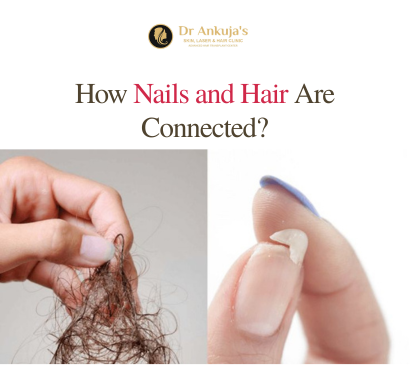
Hair loss is often the first sign people notice when their body is under stress, but nails can also reveal important clues about overall health. Nail changes combined with hair loss are not just cosmetic concerns — they can indicate nutritional deficiencies, hormonal imbalances, or systemic medical conditions.
In India, where dietary patterns and lifestyle factors vary widely, recognizing these subtle signs can help in early diagnosis and prevention. This blog explores the relationship between nail changes and hair loss, the deficiencies behind them, and practical steps for management.
Why Nails and Hair Are Connected
Both nails and hair are made of keratin, a protein that requires adequate nutrition and healthy follicle function. When the body lacks essential nutrients or faces hormonal imbalance, both hair and nails show signs of weakness.
Common links include:
- Iron deficiency → brittle nails and hair shedding
- Biotin deficiency → thinning hair and weak nails
- Vitamin D deficiency → slow regrowth of both hair and nails
- Thyroid disorders → brittle nails and diffuse hair loss
Common Nail Changes Associated with Hair Loss
1. Brittle Nails
Nails that break easily often accompany hair thinning due to iron or protein deficiency.
2. Spoon-Shaped Nails (Koilonychia)
A classic sign of iron deficiency anemia, often seen with diffuse hair loss.
3. White Spots or Lines
May indicate zinc deficiency, which also contributes to hair shedding.
4. Slow Nail Growth
If nails grow unusually slow, it often mirrors a shortened hair growth cycle.
5. Nail Ridges
Vertical ridges can be linked to aging, but when combined with hair loss, they may point to nutritional imbalance.
Causes Behind Nail Changes with Hair Loss
- Nutritional Deficiencies: Iron, zinc, biotin, vitamin D, protein.
- Hormonal Disorders: Thyroid imbalance, PCOS.
- Autoimmune Conditions: Alopecia areata, lichen planopilaris.
- Stress: Chronic stress impacts both hair and nail health.
- Medications: Certain drugs can weaken keratin structures.
Warning Signs You Shouldn’t Ignore
- Sudden brittle nails with hair shedding
- Spoon-shaped nails with fatigue (possible anemia)
- White spots with thinning hair
- Nail ridges with diffuse hair loss
If these signs persist, consult a Dermatologist in Pune. Clinics like the Hair Transplant Clinic in Pune provide diagnostic tests to identify deficiencies and recommend treatment.
Guidance & Management Tips
Lifestyle & Nutrition
- Eat iron-rich foods: spinach, jaggery, lentils.
- Include protein sources: eggs, pulses, dairy.
- Add zinc-rich foods: nuts, seeds, whole grains.
- Ensure vitamin D intake through sunlight exposure.
Medical Treatments
- Supplements: Iron, biotin, zinc, or vitamin D as prescribed.
- Topical Treatments: Strengthening nail serums and hair regrowth solutions.
- Advanced Therapies: PRP therapy or hair transplant options like Sapphire FUE or Direct Hair Implantation (DHI) for severe hair loss.
Nail changes are often overlooked, but when combined with hair loss, they serve as important warning signs of deficiency or systemic illness. Recognizing these early can help prevent progression and restore confidence. With proper nutrition, medical guidance, and advanced treatments, both hair and nail health can be improved.
FAQs
Q1. Can brittle nails and hair loss be reversed with diet?
Yes, if caused by nutritional deficiency, improvement is possible with a balanced diet and supplements.
Q2. Should I take biotin supplements for nail and hair health?
Biotin can help, but consult a doctor before starting supplements.
Q3. Can thyroid disorders cause nail and hair changes?
Yes, thyroid imbalance often leads to brittle nails and diffuse hair loss.