
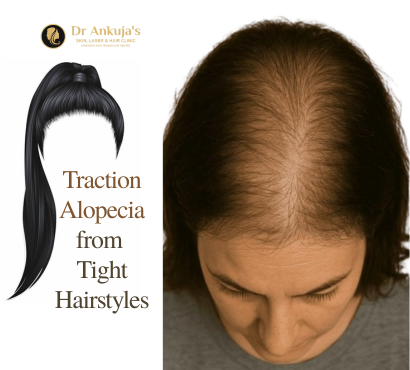
In India, hairstyles like tight braids, buns, and ponytails are not just fashion choices — they are cultural traditions, practical solutions for hot weather, and part of daily routines. However, these styles can sometimes lead to a condition called traction alopecia, a form of hair loss caused by repeated pulling on the hair follicles.
Unlike sudden shedding, traction alopecia develops gradually, making it harder to notice until thinning becomes visible. This blog explains the causes, symptoms, and prevention strategies for traction alopecia, especially in Indian women who often rely on tight hairstyles.
Why Tight Hairstyles Cause Hair Loss
Hair follicles are delicate structures. Constant pulling from tight hairstyles damages them over time, leading to inflammation, tenderness, and eventually permanent hair loss.
Risk factors include:
- Daily tight braids or buns
- Heavy hair extensions or accessories
- Frequent use of tight rubber bands or clips
- Cultural or occupational practices requiring pulled-back hair
Symptoms of Traction Alopecia
- Gradual thinning along the hairline and temples
- Broken or short hairs near the forehead
- Redness, itching, or tenderness in affected areas
- Small bald patches where hair is constantly pulled
- Scalp bumps or folliculitis in severe cases
👉 If these symptoms persist, consult a Dermatologist in Pune. Clinics like the Hair Transplant Clinic in Pune provide diagnostic support and advanced treatments for traction alopecia.
Causes & Risk Factors
- Cultural Hairstyles: Tight braids and buns worn daily.
- Hair Extensions: Heavy extensions strain follicles.
- Occupational Needs: Nurses, athletes, and dancers often tie hair tightly.
- Chemical Treatments: Relaxers or straightening combined with tight styles worsen damage.
Prevention & Guidance
Lifestyle & Hair Care
- Opt for looser hairstyles whenever possible.
- Alternate styles to reduce constant strain on the same follicles.
- Use soft fabric scrunchies instead of tight rubber bands.
- Avoid heavy hair accessories that pull on roots.
Medical & Professional Care
- Topical Treatments: Anti-inflammatory creams for scalp tenderness.
- PRP Therapy: Platelet-rich plasma injections to stimulate regrowth.
- Hair Transplant Options: Advanced techniques like Sapphire FUE Hair Transplant or Direct Hair Implantation (DHI) can restore hairline density in severe cases.
Awareness Section: When to Seek Help
If you notice thinning along the hairline, persistent scalp tenderness, or broken hairs near the temples, it’s time to consult a specialist. Early intervention prevents permanent follicle damage.
Traction alopecia is preventable. By recognizing early signs and adopting gentler hair practices, Indian women can protect their hair health while maintaining cultural and personal styling preferences. With medical guidance and advanced treatments, restoring confidence and natural hair density is possible.
FAQs
Q1. Can traction alopecia be reversed naturally?
Yes, if detected early and hairstyles are modified, regrowth is possible.
Q2. Is hair transplant necessary for traction alopecia?
Only in advanced cases where follicles are permanently damaged. Consult a Hair Transplant Surgeon for evaluation.
Q3. Are hair extensions safe for women with thinning hair?
Heavy extensions worsen traction alopecia. Lightweight, temporary options are safer.